


Top-Selling Label Printers Helping NZ Businesses Ship Smarter
Shipping delays rarely start with couriers. For many New Zealand businesses, the real bottleneck happens earlier—inside the warehouse, behind the counter, or at the packing bench. Smudged labels, slow printing, or unreliable devices quietly create missed deliveries and frustrated customers. When orders pile up, the wrong label printer can slow everything down.
Today’s NZ businesses need shipping systems that work cleanly, quickly, and without drama. That is why choosing the right label printer now plays a direct role in delivery speed, accuracy, and customer trust. Whether you run a retail store, warehouse, clinic, or eCommerce brand, the right printer helps your team ship smarter from day one.
Why Label Printers Are Now Business-Critical in NZ
Shipping expectations across New Zealand have changed fast. Customers expect same-day dispatch, clear tracking, and professional labels that scan correctly every time. Businesses juggling online orders, in-store sales, and third-party fulfillment cannot afford slow or inconsistent printing.
Lean warehouse teams are another factor. With fewer hands doing more work, equipment must be simple and reliable. A dependable label printer removes guesswork and keeps workflows moving without constant fixes. Plug-and-play setups matter more than ever in busy NZ operations.
Multi-channel selling has also raised the stakes. Labels must work across couriers, inventory systems, and POS platforms. When labels fail, the cost shows up in returns, delays, and reprints. That is why smart businesses invest early in the right label printers.
USB + Ethernet Connectivity for Shared Workspaces
For businesses with multiple users or growing teams, network-ready printers offer a clear advantage. Ethernet connectivity allows shared access without moving hardware or swapping cables. This setup suits retail stockrooms, warehouses, and healthcare environments where labels are needed throughout the day.
The Honeywell Pc42e-T stands out as a reliable option for these shared spaces. Its stable output supports barcodes, shipping labels, and stock tags used daily across NZ industries. Teams value its compact size, which fits neatly into crowded work areas.
Businesses choosing Honeywell printers often prioritize consistency over complexity. The Pc42e-T supports steady workloads without constant supervision, making it suitable for operations that cannot afford downtime. For growing NZ businesses, network-ready printing supports scale without disruption.

USB Thermal Transfer for Long-Lasting Labels
Some businesses require labels that survive handling, storage, and transport. Thermal transfer printing suits these needs by producing durable labels that resist fading and wear. Manufacturing, logistics, and wholesale operations often rely on this method for long-term identification.
The ZEBRA ZD220T is designed for businesses that need dependable results without complex setups. It delivers clean, readable labels suitable for cartons, shelving, and stored goods moving through NZ supply chains.
For businesses that ship products over longer distances or store items for extended periods, durability matters. Choosing a thermal transfer label printer reduces reprints and scanning errors. Over time, this saves both labor and materials while keeping operations running smoothly.

USB Direct Thermal for Fast, Everyday Shipping
Not all labels need to last forever. Shipping labels, dispatch notes, and courier stickers often serve a short purpose. For these tasks, direct thermal printing offers speed, simplicity, and lower running costs. There are no ribbons to manage, making daily use easier for busy teams.
The ZEBRA D fits this role perfectly. It is built for fast output and fuss-free operation, making it popular among NZ eCommerce sellers and courier-driven businesses. Teams can print, peel, and ship without delay.
Businesses focused on quick turnaround appreciate the cost control direct thermal printing offers. Fewer consumables mean predictable expenses, while simple operation reduces training time. For growing online sellers, speed and clarity make a real difference at scale.

High-Speed Desktop Printing for High-Volume Environments
Some operations move more stock than others. Fulfillment centers, large retailers, and distribution hubs require printers that keep pace with volume. Speed and consistency become non-negotiable when hundreds of labels are printed each day.
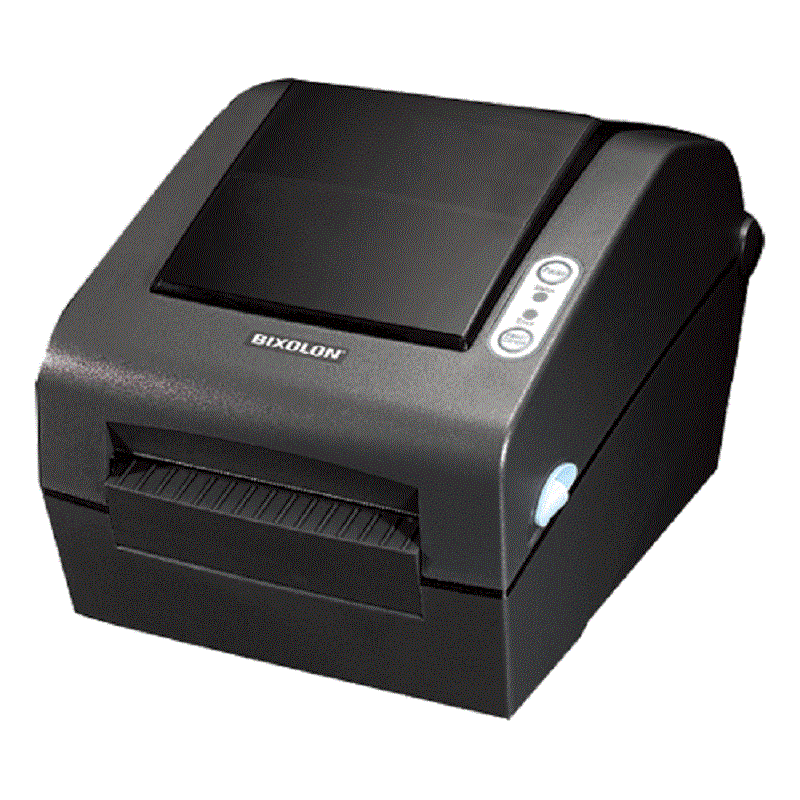
The Bixolon SLP-DX420 is designed for these performance-driven environments. Its fast output supports continuous workflows without sacrificing print clarity. Businesses processing bulk orders benefit from fewer slowdowns and cleaner dispatch cycles.
High-volume printing demands reliability under pressure. Choosing a printer built for speed helps teams meet deadlines and reduce backlogs. For NZ businesses shipping at scale, the right desktop printer supports growth without adding stress.
What NZ Businesses Look for Before Buying
Ease of setup ranks high for many buyers. NZ workplaces value devices that work straight out of the box without specialist support. Simple installation saves time and avoids delays during busy periods.
Compatibility is another key factor. Label printers must integrate smoothly with POS and inventory systems already in place. Businesses want assurance that their printer will work with existing workflows rather than disrupt them.
Running costs also matter. Consumables, maintenance, and reprints affect long-term budgets. Choosing the right printing method upfront helps businesses control expenses while maintaining output quality.
Buying Local Matters More Than Ever
Local availability and support play a growing role in buying decisions. When equipment fails, delays cost money. Businesses prefer suppliers who understand NZ conditions and can offer reliable access to parts and replacements.
Many buyers turn to POS Central NZ because it offers local product access and understands the needs of New Zealand businesses across retail, logistics, healthcare, and eCommerce. Choosing a trusted local supplier reduces risk and simplifies ongoing support.
For purchase-ready buyers, knowing where to source proven label printers locally builds confidence. Support, availability, and product knowledge often matter as much as price.
Choosing the Right Label Printer for How You Ship
There is no single best label printer for every business. The right choice depends on shipping volume, label lifespan, and workspace setup. Businesses shipping daily may prioritize speed, while others value durability or shared access.
Understanding how labels are used today helps future-proof decisions. As NZ businesses grow, scalable solutions reduce the need for early upgrades. Choosing proven models with clear strengths supports long-term efficiency.
Label printers are no longer optional tools. They form a core part of modern shipping workflows. Businesses that invest wisely benefit from faster dispatch, fewer errors, and smoother operations.
Frequently Asked Questions
Which label printer is best for fast shipping in NZ businesses?
For fast shipping, direct thermal printers like the ZEBRA ZD220D suit high-turnover operations using short-life labels.
What’s the difference between direct thermal and thermal transfer printers?
Direct thermal suits short-term labels, while thermal transfer works better for long-lasting labels used in storage or transport.
Is the ZEBRA D suitable for eCommerce shipping labels?
Yes. It is well-suited for daily shipping labels used by NZ eCommerce and courier-based businesses.
Do NZ warehouses need Ethernet-ready label printers?
Warehouses with shared workstations benefit from Ethernet connectivity, allowing multiple users to print without moving devices.
Which label printer works best with POS systems in NZ?
Reliable desktop printers from brands like Zebra, Honeywell, and Bixolon integrate smoothly with common POS systems.
Where can NZ businesses buy trusted label printers locally?
Many NZ businesses choose POS Central NZ for access to proven models and local supply support.
Read more 👇


Comments